
For the last four years I’ve been saying: “There will be some interesting papers written in future about Ukrainian strategy and command.” While I had hoped for peace and serious studies by now neither has occurred so let me start.
The change paradox
First, remember that the protagonists started in the same place in 1991. While they both changed a lot over the following 20 years they retained much in common. As I understand, it was less than 10 years ago that Ukraine set about modernising their army and moving away from Soviet style command-and-control.
Yet in that time Ukraine moved from a very hierarchal structure to mission command (next up). Importantly, they have done this under intense pressure: they were at war.
I have seen this change paradox many times. Everybody knows “the time to fix the roof is when the sun is shining”. The problem is, when you have time and resources to change and fix things the motivation is low. When times are tough the resources are limited but the motivation is high.
My heart sinks when companies tell me: “We want to make this change but right now we have an urgent project to finish.” They should be thinking “This urgent project is the reason to change how we work.”
Mission command: Leadership for agility in battle
“Frequent and rapid decisions can be shaped only on the spot according to estimates of local conditions.” Moltke quoted by Tetlock
One side: big, powerful, well equipped with a strict command and control approach.
The other: small, under equipped, few plans, responding to what happens.
Everyone expected the bigger to win in days but the smaller one repulsed the attack. A small team out performs a larger team.
The difference was mission command: a philosophy that gives commanders a mission, an objective, an outcome and lets them decide how to achieve it. This has been American doctrine since the 1980s and asks the local leaders to : “think. If necessary, discuss your orders. Even criticize them. And if you absolutely must … disobey them. … Clarification of the enemy situation is an obvious necessity, but waiting for information in a tense situation is seldom the sign of strong leadership—more often of weakness.”
American doctrine became NATO doctrine became Ukrainian doctrine. Perhaps troublingly, America didn’t invent the idea, they took it from the Wehrmacht. Auftragstaktik as it was known lead to victories in the early years of WWII but was later undermined by leadership who involved themselves too much.
(The quotes are from the best introduction I’ve read to mission command, Philip Tetlock’s book Superforecasting.)
Product Development: Drones
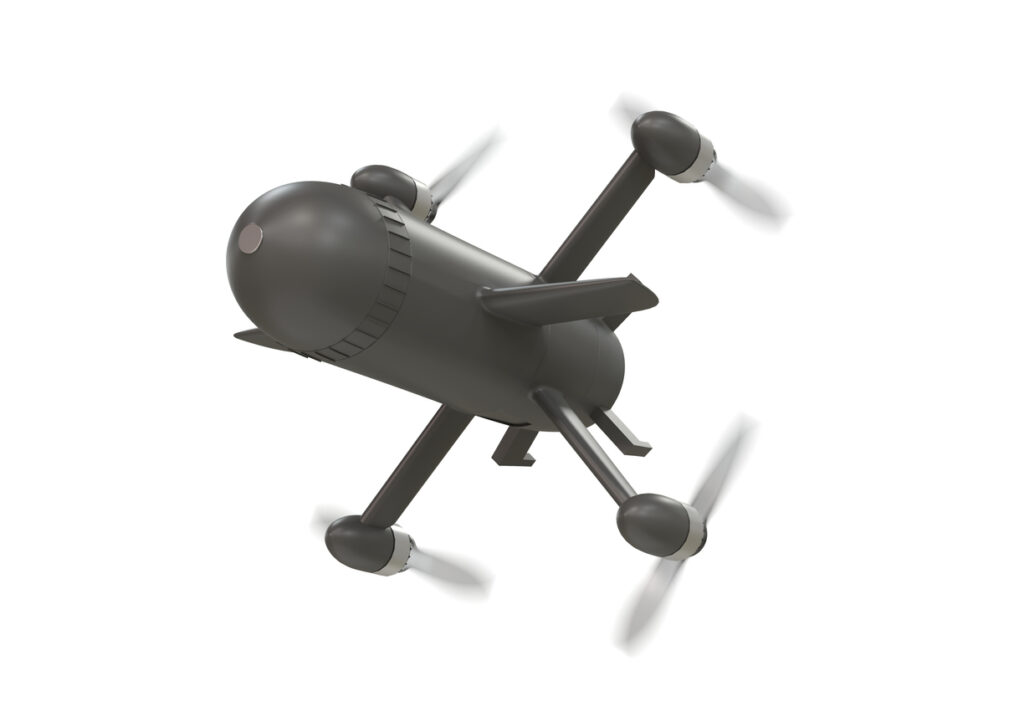
Like computers, airplanes and radar before them the pace of drone innovation and manufacturing on both sides is a sharp reminder of how war can drive rapid innovation. Ukraine in particular stands out as a world leader, perhaps the world leader, both in drone innovation and battlefield tactics with drones.
Ukraine stands in sharp contrast with western efforts which, while not insignificant, are very much in a peace time mode. An increasing number of start-ups are bringing modern digital product development skills to bear but since the major customers are still in peace mode even these are frustrated.
A few years ago I met a team building a weapons system. The first systems test was two or three years off. When I asked why they couldn’t do it sooner they looked at me as if I was mad “too expensive, we can’t just blow up an expensive prototype.” So every decision was considered, reviewed, re-examined, and took time.
They would say they were saving tax payer money but I saw a waste of money because they were trying to learn (slowly) on paper. (I asked about digital tools: another, disconnected, group.)
As I keep saying: engineers engineer within constraints. For the legacy armaments suppliers the main constraint is Government funding, not just the amount of funding but the strings that come with it. Before any money is spent all sides need to show that the money is being spent wisely, fairly, and that no unnecessary money is spent. This results in procurement and approval systems which are themselves long winded and expensive to operate – queuing again.
War changes the constraints, now time to market – time to kill – is more important than saving money. Test and learn opportunities are plentiful. Fear of a failed test, or wasted money is less than the fear of defeat. Money hasn’t gong away, but it is not saving money in development, it is reducing cost of manufacturing.
As always: there is more than one way to solve a problem and the constraints determine how you go about solving the problem.
Put it all together
Ultimately all these three examples are about learning and acting on that learning. Most learning occurs early on. Planning is learning but so is doing. Plan a little, do a little, learn a little, keep iterating.

Motivated people, devolved authority, clear constraints and a need for action. Isn’t that what every team would like?
Perhaps it is also a check list:
- Are your team motivated?
- Is authority close by?
- Are the constraints clear?
- And is there a need to act?
There is going to be more to learn from this war but lets start with that checklist.
By the way…
One of my pet hates is “what we can learn from the military” talks when the speakers have no military experience. I’m breaking my own rule here. In my defence, I do have a little first hand knowledge of both countries and peoples, I’ve a little contact with British military industrial complex and I read some credible sources (e.g. The Economist.)